Resources

Go Deeper.

Explore further resources related to our work.

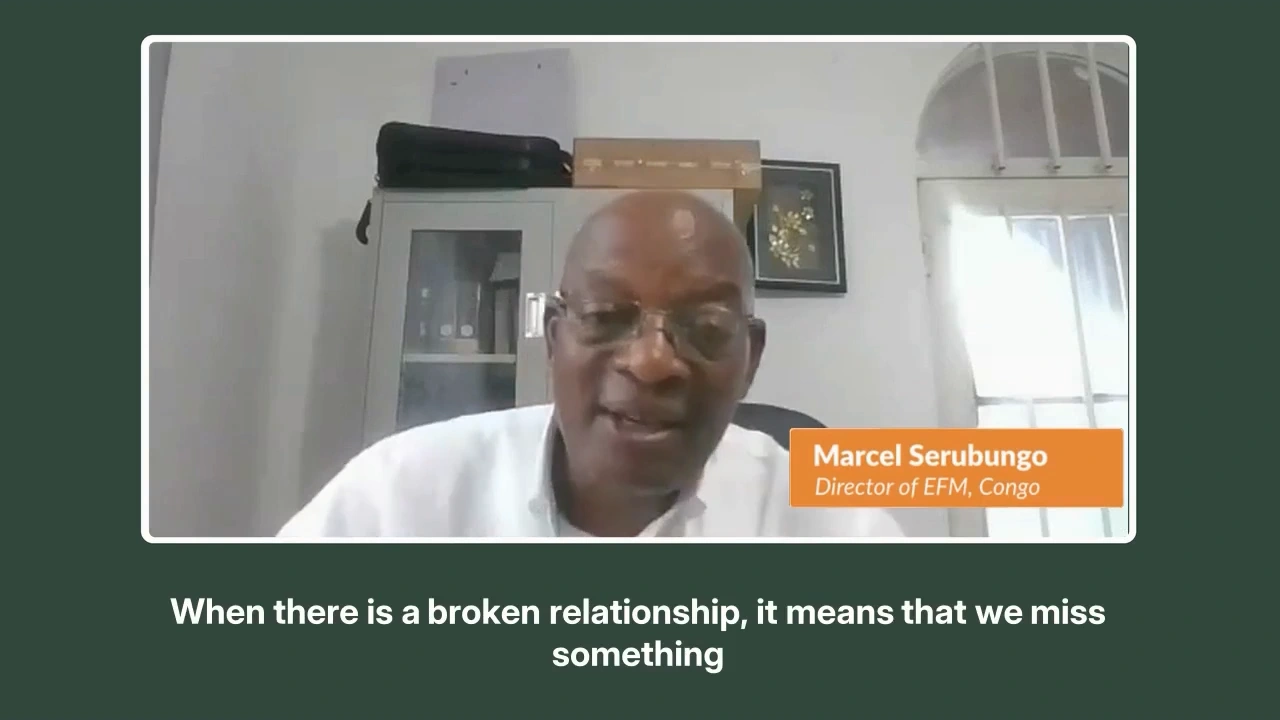
Marcel Serubungo speaking in the Peacemaking in Practice video series

Peacemaking in Practice Video Series

Marcel shares stories and practical advice for making peace with those around us. This resource can be used individually, with another, or with a small group.

  • Video 1: A Peacemaker is Not a Judge
  • Video 2: What's Really Going On?
  • Video 3: When We Pretend There Isn't a Conflict
  • Video 4: Beyond Forgiveness
  • Video 5: Called to Peacemaking
Access Videos
Peacemaking in Practice reflection guide cover: Conversations with Marcel Serubungo

Peacemaking in Practice Reflection Guide

These guides accompany each video and include Bible verses, discussion questions, and prayers to grow as a peacemaker. This resource can be used individually, with another, or with a small group.

Access Guide

Sometimes the best answers are right in front of us.

We're an uncommon kind of humanitarian organization and ministry. Get to know us.

Questions & Answers

Why do you work in the eastern DRC?

We work within the eastern Democratic Republic of the Congo.

The eastern DRC has one of the most severe humanitarian situations in the world. It is also home to one of the largest Christian populations in one of the largest Christian regions in the world. We work at the local (village and community) level. While we interface with government leaders, we are not a government organization and do not rely on any government assistance.

Why do you work with churches?

We partner with local Christian churches and ministry leaders, while including leaders in government, the community, and other religious traditions.

Humanitarian organizations do vital work in the DRC, but cannot be everywhere at once, and outside aid by its nature comes and goes. Churches already possess the relationships, credibility, and reach to create meaningful change across all three of EFM's core program areas. They are leading social services facilitators, safe community gathering places, authority structures, and enduring institutions in Congolese culture.

Why focus on faith restoration, peacebuilding & trauma care?

We provide services in experiential education and care facilitation.

Faith leaders are the pillars of their communities in this part of the world. When they struggle, so do their communities. Faith restoration strengthens them to continue to do their jobs and provide support for their people.

Without peace, other forms of humanitarian assistance are ultimately wasted. People cannot use material resources when threats to their persons or property are a reality. Government is beleagured, or sometimes a part of the problem. When people have skills to adjudicate issues for themselves, community building is possible.

When women carry the scars of violence, the welfare of the entire community suffers. Holistic trauma care that considers physical, emotional, mental, relational, and spiritual components brings healing that strengthens individuals, families, and villages.

What denominations do you work with?

Inside the DRC

We have the most experience working with Protestant denominations, but we regularly include Catholics, Pentecostals, Independents, and Muslims in our programs. We believe our theological teachings are broad enough to be relevant to all these faith perspectives.

Outside the DRC

Similar to our partners within the country, most are individuals, churches, and organizations coming from a Protestant background. We welcome partnership with anyone who aligns with our vision, mission, and approach.

Are you a missions organization?

While we come from Christian traditions that value the sharing of the euangelion (good news) Jesus talked about, we're not specifically focused on Christian missions. We primarily work with those who already profess the Christian faith.

Why is there so much violence in the DRC?

Colonial Legacy

Belgian rule exploited the Congo (later called Zaire) and left weak institutions behind. Since independence in 1960, political instability and corruption have fueled ongoing conflict.

Conflict over Natural Resources

The DRC's wealth of gold, diamonds, cobalt, and coltan draws armed groups and foreign actors seeking control, fueling a cycle of violence funded by mining profits.

Ethnic Conflict

The 1994 genocide in neighboring Rwanda deepened tensions bewtween ethnic Tutsis and the Congolese in the majority. Rwanda-backed militias have long infiltrated into villages across the border. They've made several major offensives, most recently in January 2025, seizing large areas in the eastern part of the country and contributing to mass displacement.

How can I pray for the DRC?

Our Country Director, Marcel Serubungo, has regularly asked us to pray for:

  • Peace talks between governments in conflict
  • Hope, strength, and encouragement for church leaders as they care for those in their congregations
  • The ability for our programs to reach communities that are currently isolated
  • The large population of Internally-Displaced Persons without a permanent home and subject to further mistreatment
  • Women who have been the victims of gender-based violence who feel ostracized from their families and communities.

How can I partner with you?

We're always looking for like-minded individuals, churches, and organizations to join us in financial support. Learn more here.